This piece discusses the full film, including the ending.
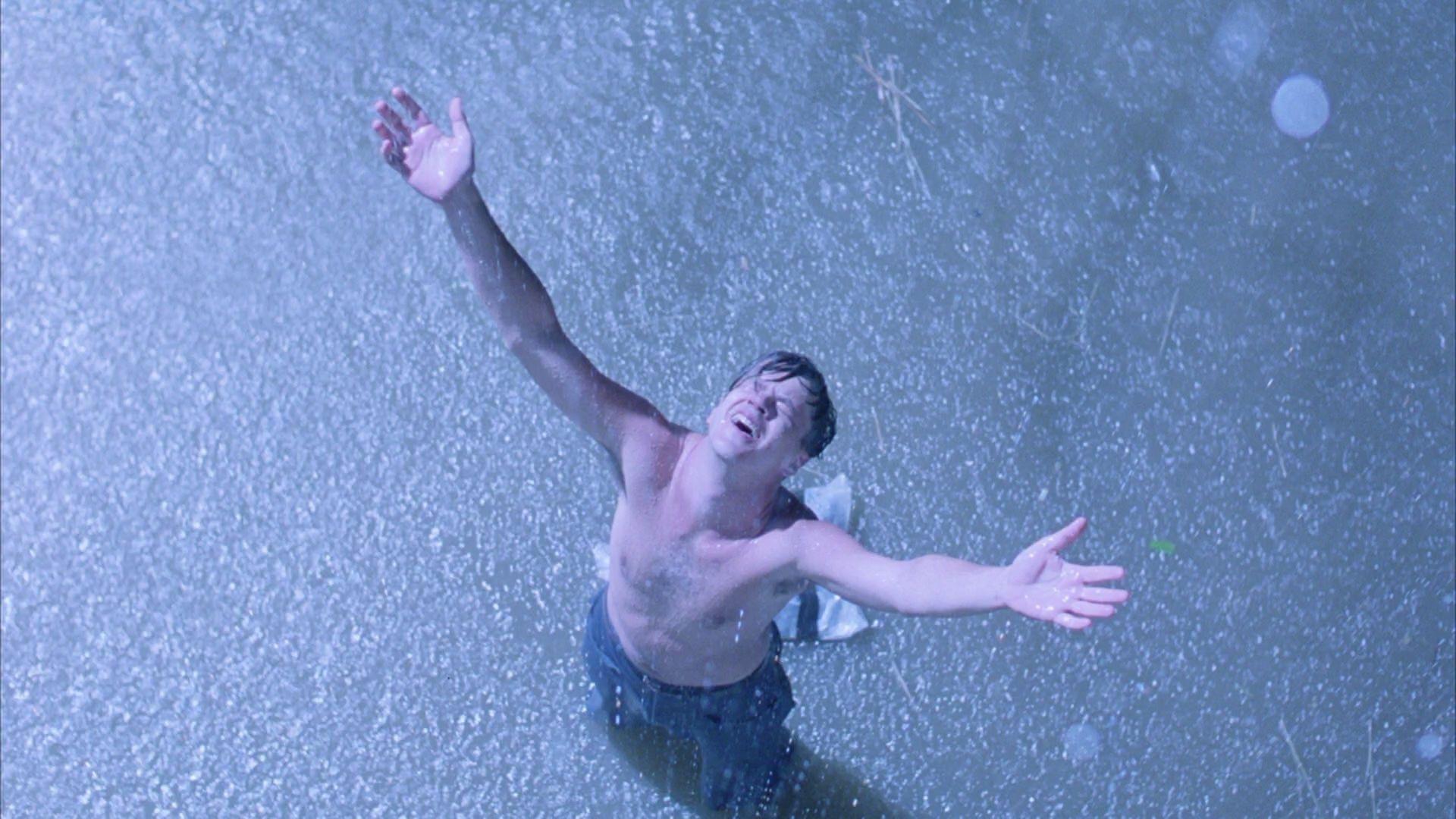
There's a moment near the end of The Shawshank Redemption that I've watched a dozen times and it still does something to me. Andy Dufresne crawls through five hundred yards of raw sewage — "the length of five football fields," Red tells us — and comes out the other side. He tears open his shirt. He raises his arms. It's raining.
It looks like a resurrection.
That image is too deliberate to be accidental. Darabont isn't subtle about his symbolism — he never has been. But the question worth asking isn't whether this scene is intentional. The question is what it actually means, and why it works on us the way it does.
The Pattern of Descent
Before a resurrection, there has to be a death.
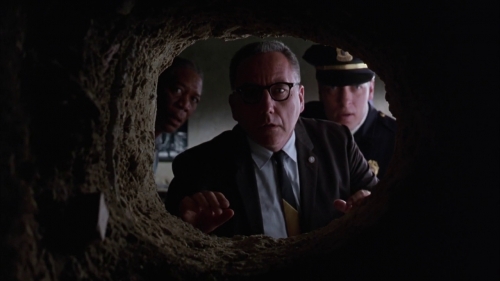
Andy's imprisonment is a prolonged dying. He loses his freedom, his reputation, his marriage. He is assaulted, repeatedly, in ways the film only partially shows us. He watches men around him be broken. He watches Brooks hang himself in a rented room. He watches a young man who could have cleared his name get shot in the courtyard by a warden who preferred to keep his accountant.
By the time Andy disappears into that tunnel, he has endured what the medieval mystics called via negativa — the way of negation. Everything that could be taken from him has been taken.
The tunnel is the tomb. Five hundred yards of darkness, of filth, of the world's worst of itself. You don't come through something like that and emerge the same person.
The River of Death and New Life
Here is what's strange about that final image: Darabont could have shown Andy simply walking out of the tunnel, or running, or collapsing in relief. Instead he stands in a river, arms wide, soaked, face turned to the sky.
Baptism works the same way. Water as death and rebirth. The old self drowned, the new self rising. This isn't accidental religious language — it's the oldest religious language there is, and it appears in traditions far older than Christianity. Water has always meant both death and life.
"The sewage pipe is the ugliest possible image of death and passage. That's exactly why it works."
The ugliness matters. If Andy had escaped through a clean tunnel, through some clever door, the image wouldn't carry the same weight. He had to go through the worst of it. The filth is the point.
Zihuatanejo — The Promised Land
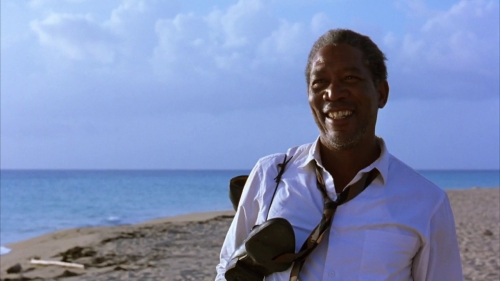
The place Andy always talks about is a fishing village on the Pacific. He describes it to Red like a man describing a vision, not a memory. He's never been there. He can't know what it's like. He holds onto it anyway — as pure faith, as pure hope.
This is the structure of every promised land. The Israelites never set foot in Canaan while Moses lived. Thomas never touched the wounds until after. The hope has to precede the arrival, otherwise it isn't hope — it's just a plan.
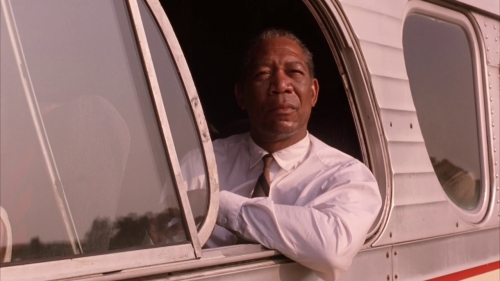
When Red finally runs toward the sea in the film's final moments, he's not just a paroled convict going to meet a friend. He's making a kind of conversion. He spent thirty years telling himself hope was a dangerous thing. Now he's running toward it.
Does It Have to Be Christian?
Honest answer: no. Joseph Campbell would tell you this pattern — descent, ordeal, return — is the monomyth, the story underneath all stories. Jung would call it the death and rebirth of the self. Every major tradition has its version.
But here is what I'd say to that: the fact that resurrection appears everywhere doesn't make it less true. It might make it more.
What The Shawshank Redemption is doing — whether Darabont knew it or not — is reaching toward something the human mind keeps reaching toward across every culture and century. The idea that suffering doesn't have to be the final word. That something can come through the pipe that should have killed it and stand in the rain with its arms open.
Stories sometimes know more than their authors. This one did.


