This piece discusses the full 2017 film, including its ending. Content note: the film depicts suicide, self-harm, and severe alcohol abuse, and this piece discusses all three directly.
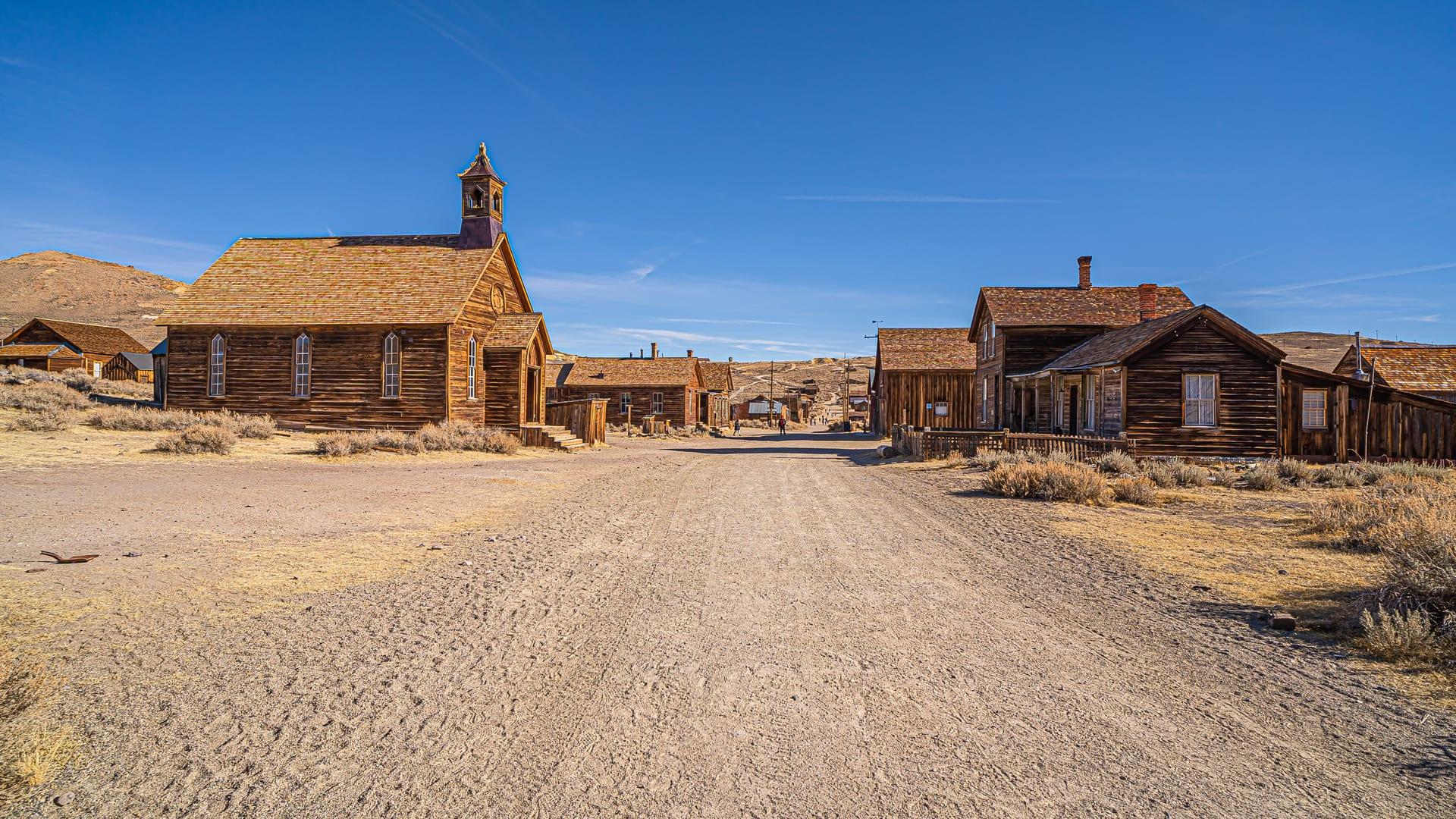
A man sits in a small white church in upstate New York and writes in a notebook. He has decided to keep a journal for one year, in longhand, and to destroy it when the year is done. He writes that this is not a diary. He writes that he will not lie in it. Then he pours whiskey into a glass of Pepto-Bismol and drinks it, and you understand that the second promise is going to be harder than he thinks.
Ernst Toller is the pastor of First Reformed, a 250-year-old church in Snowbridge that survives as a gift shop with a service attached. Twelve people come on Sunday. The tour groups come on weekdays. He is dying and has not told anyone. And in the first twenty minutes, a pregnant parishioner asks him to counsel her husband, who has a question.
The question is: will God forgive us?
The Question Nobody Answers
Michael is an environmental activist recently out of jail. He does not want to bring a child into a world he believes is ending. He asks his pastor the only question that matters to him, and Paul Schrader — who grew up Calvinist, who did not see a film until he was seventeen, who wrote Taxi Driver — builds an entire movie around the fact that Toller cannot answer it.
What Toller offers instead is good pastoral practice. He says that hope and despair both live in the same place, that a man can hold them at once, that certainty is not the point. "Courage is the solution to despair," he says. "Reason provides no answers." It is not a bad answer. It is a seminary answer. It is the answer of a man who has learned the shape of consolation without currently having any.
Michael kills himself. And the question passes to Toller like an inheritance.
Where the Film Puts the Danger
Here is where First Reformed becomes more theologically serious than the ecological reading suggests. The movie is often described as a film about climate grief, and it is — Toller discovers that Abundant Life, the megachurch that keeps First Reformed financially alive, is underwritten by a man whose company is among the region's worst polluters. That plot is real and the film means it.
But the danger the film actually tracks is not ecological collapse. It is despair. And Schrader is precise about this in a way that most films about a crisis of faith are not: despair is not the absence of belief. Toller believes everything. He never stops believing. He believes so thoroughly that the wrongness of the world becomes unbearable, and belief itself becomes the pressure that breaks him.
The Christian tradition has a name for this and treats it with unusual gravity. Despair is classed among the sins against the Holy Spirit — not because sadness is sinful, but because despair is a conclusion about God. It is the decision that a particular wrong is larger than mercy. Toller does not lose his faith. He performs a theological act, and the act is concluding that the answer to Michael's question is no.
"Even Jesus Wasn't in the Garden Always"
The most important line in the film is delivered by the character the film has trained you to dismiss.
Pastor Jeffers runs Abundant Life. He wears a headset. He has a five-thousand-seat sanctuary and a youth program and a donor whose money is filthy, and Toller regards him with the particular contempt that failing institutions reserve for successful ones. And late in the film, Jeffers looks at Toller and says: "You're always in the Garden. Even Jesus wasn't in the Garden always."
It lands like an accusation because it is one, and it is correct.
Gethsemane is not a place a person is supposed to live. It is where Jesus sweats and asks for the cup to be taken away — "My Father, if it is possible, may this cup be taken from me. Yet not as I will, but as you will" (Matthew 26:39). It is the most honest moment in Scripture about how much this costs. But it is a night, not an address. The garden is followed by a morning, and the whole architecture of Christian hope depends on the sequence continuing.
Toller has moved into the garden. He has made a home in the agony and mistaken it for faithfulness. And what makes the film unsparing is that this looks, from the inside, exactly like taking the world's suffering seriously.
Creation Groaning, and the Thing Toller Gets Right
To be fair to Toller — and the film is fair to him — his grief is not a symptom. The world he is grieving is genuinely wounded, and Christianity does not ask anyone to pretend otherwise.
Paul writes that "the whole creation has been groaning as in the pains of childbirth right up to the present time" (Romans 8:22). That is not a verse about a world that is fine. It is a verse about a world in labor — real pain, real damage, and a direction. The groaning is going somewhere. That is the entire weight-bearing claim, and it is precisely the claim Toller can no longer make.
He has the diagnosis right and the ending wrong. He sees the wound clearly. He has stopped believing it is the pain of childbirth rather than the pain of dying.
The Ending, and Why It Can't Be Settled
Toller puts on a suicide vest under his cassock for the reconsecration service. He sees Mary through the window. He takes the vest off. He wraps himself in barbed wire, pours drain cleaner into a glass, and then Mary is in the room, and they embrace, and the camera circles them, and the film cuts to black mid-motion.
People have argued about that ending since 2017. Is she there? Is he dying? Is this grace arriving in the last available second, or a dying man's last mercy to himself?
Schrader has been asked and has declined to resolve it, and the refusal is the point. Transcendental style — the film grammar Schrader wrote a book about at twenty-six — works by withholding. It builds an unbearable pressure and then does not release it in the way a conventional film would, so that whatever release arrives has to come from the viewer.
The film will not tell you whether God forgave them. It will only show you a man who concluded the answer was no, and then put something in the room with him that his conclusion did not account for.
What Lingers
First Reformed is not a film about whether the planet can be saved. It is a film about a man who took a real question seriously, could not bear the silence that followed, and decided the silence was an answer.
The last thing the movie does is refuse to confirm that he was right.
Questions Worth Sitting With
- Jeffers says Toller is "always in the Garden." Where in your own life have you mistaken living in the agony for taking something seriously?
- Toller never stops believing. What does it tell you that despair, in this film, is something faith does rather than something that replaces it?
- Michael's question — will God forgive us? — never gets answered on screen. What would it cost you to answer it out loud?
- Romans 8 calls the world's pain the pain of childbirth. What would change if you actually believed the groaning was going somewhere?
Sources: First Reformed, written and directed by Paul Schrader (A24, 2017). Schrader's formulation of transcendental style is from his Transcendental Style in Film: Ozu, Bresson, Dreyer (University of California Press, 1972; reissued 2018 with a new introduction discussing this film). Scripture quotations are NIV. Schrader has discussed the ending's deliberate ambiguity in numerous interviews around the film's release; no single authorized reading exists, and this piece does not claim one.